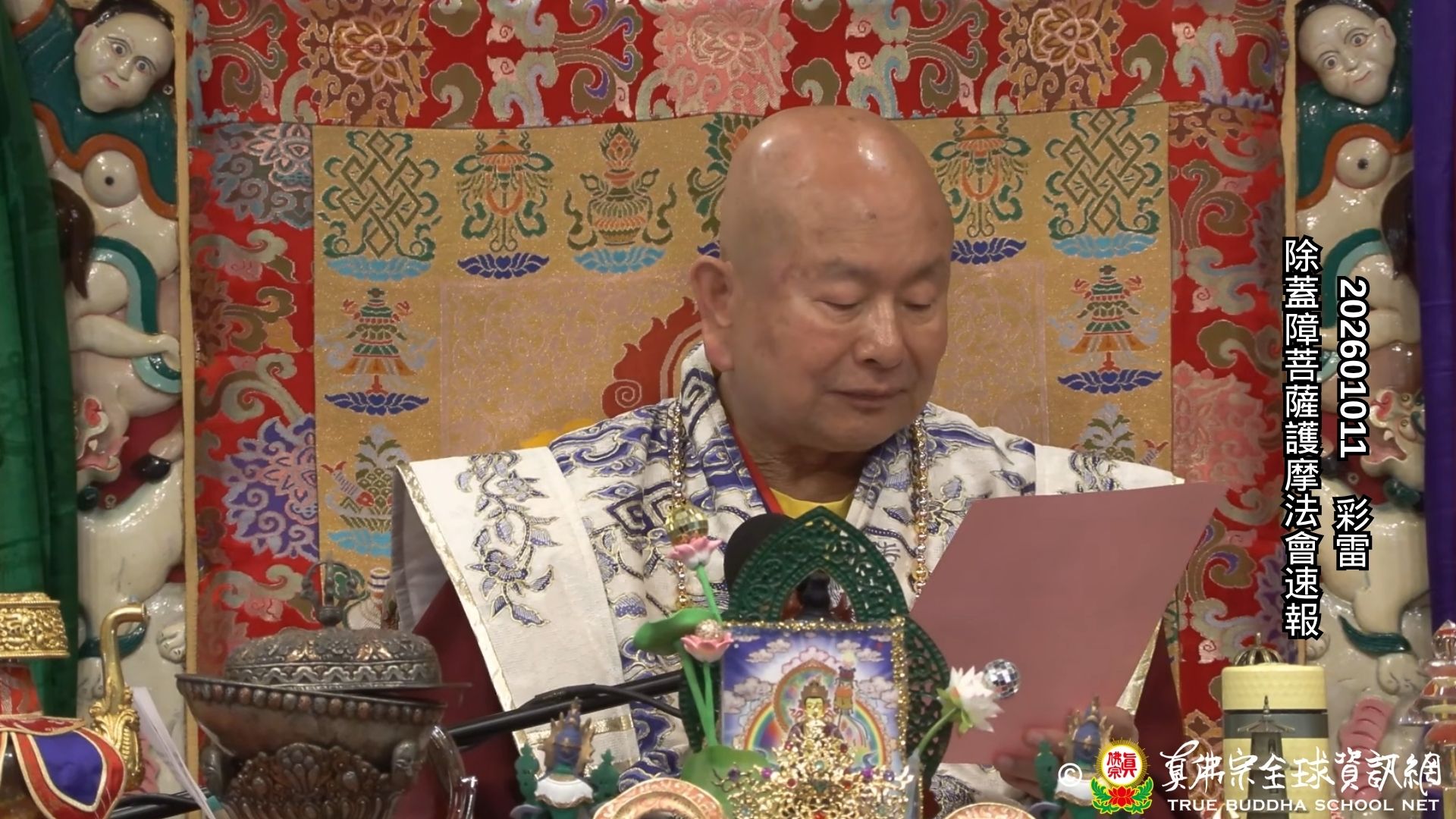
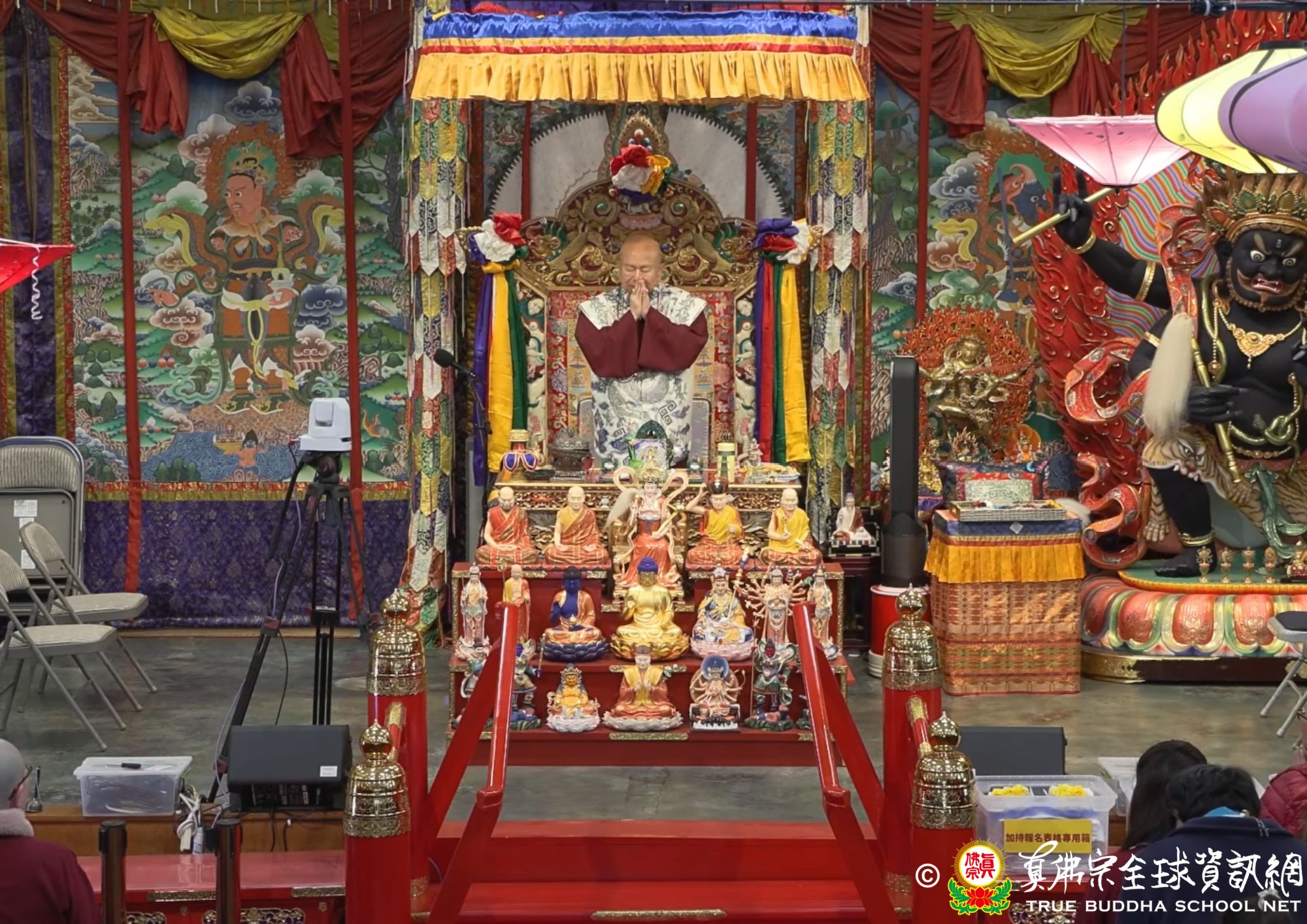
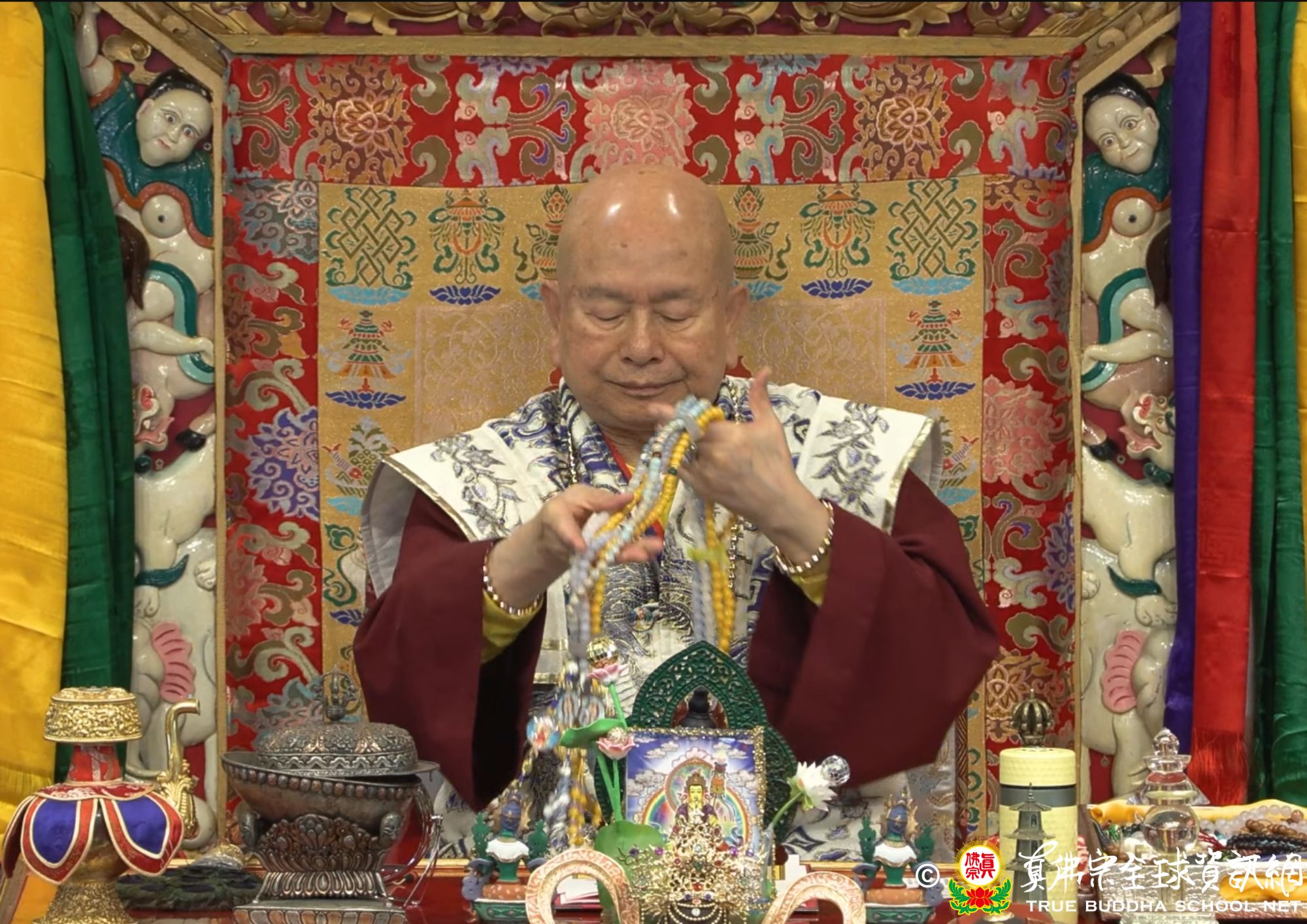
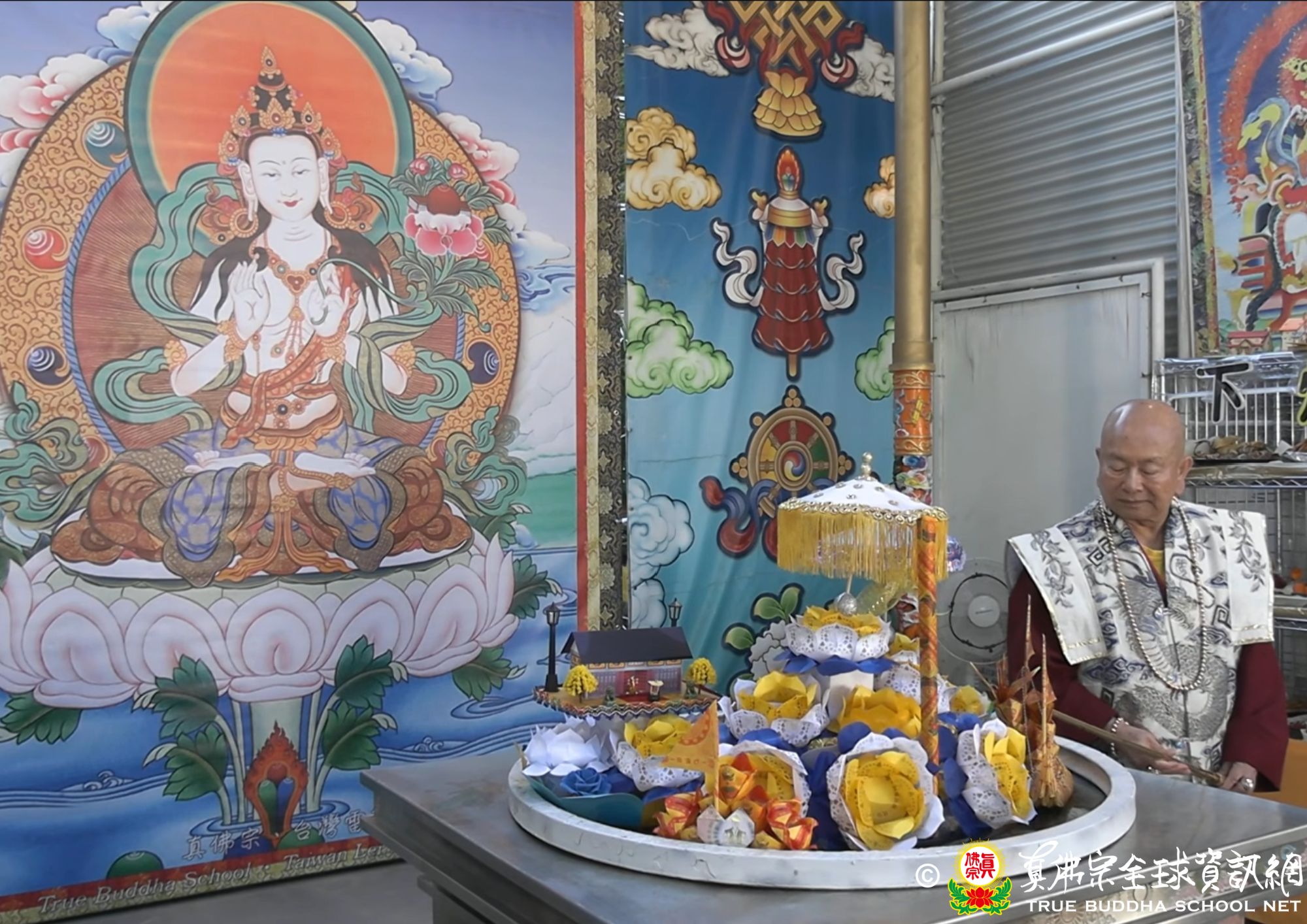
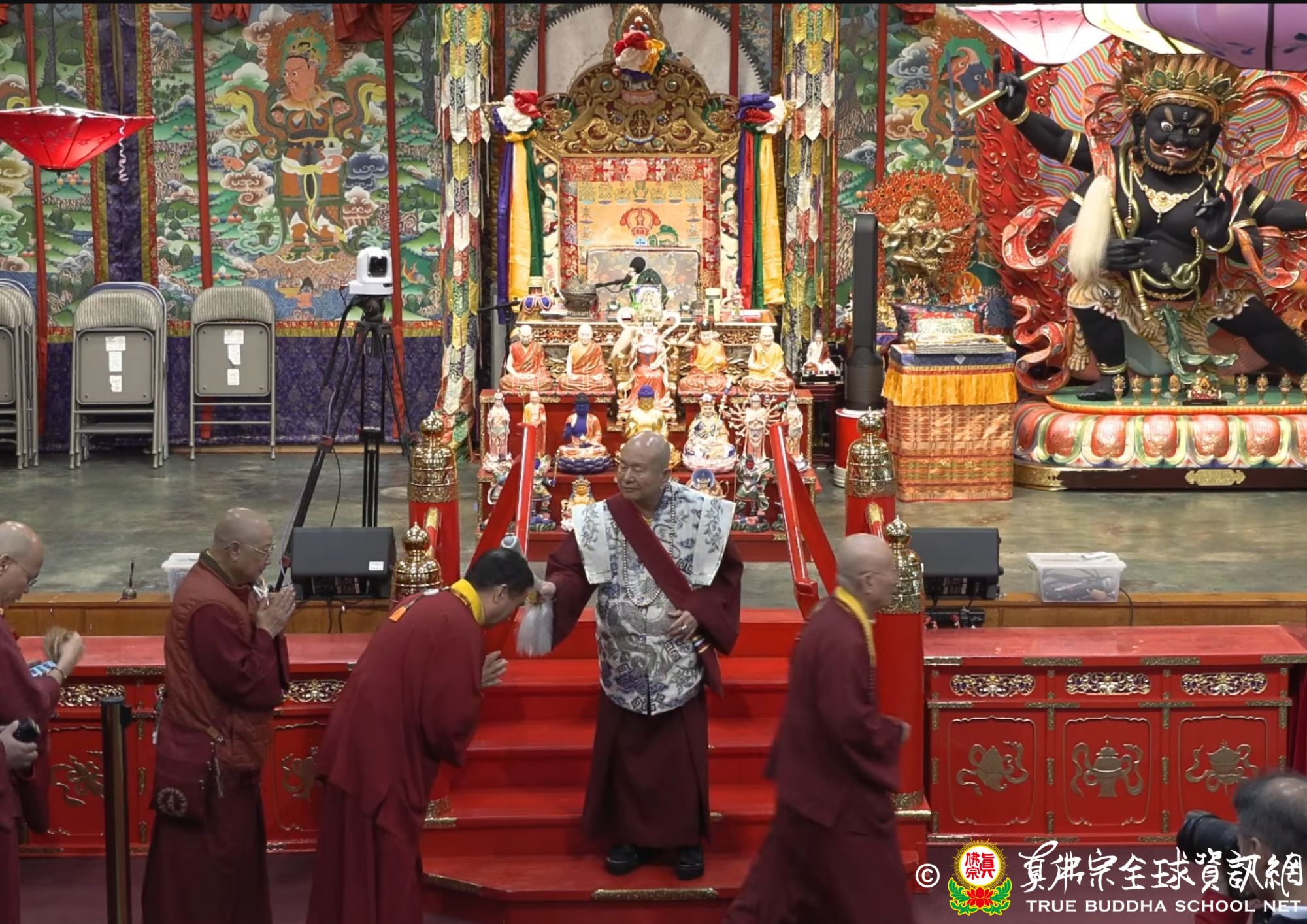
October 11, 2026 Highlights of the Sarvanivarana-Viskambhin Bodhisattva Homa Ceremony
By TBSN
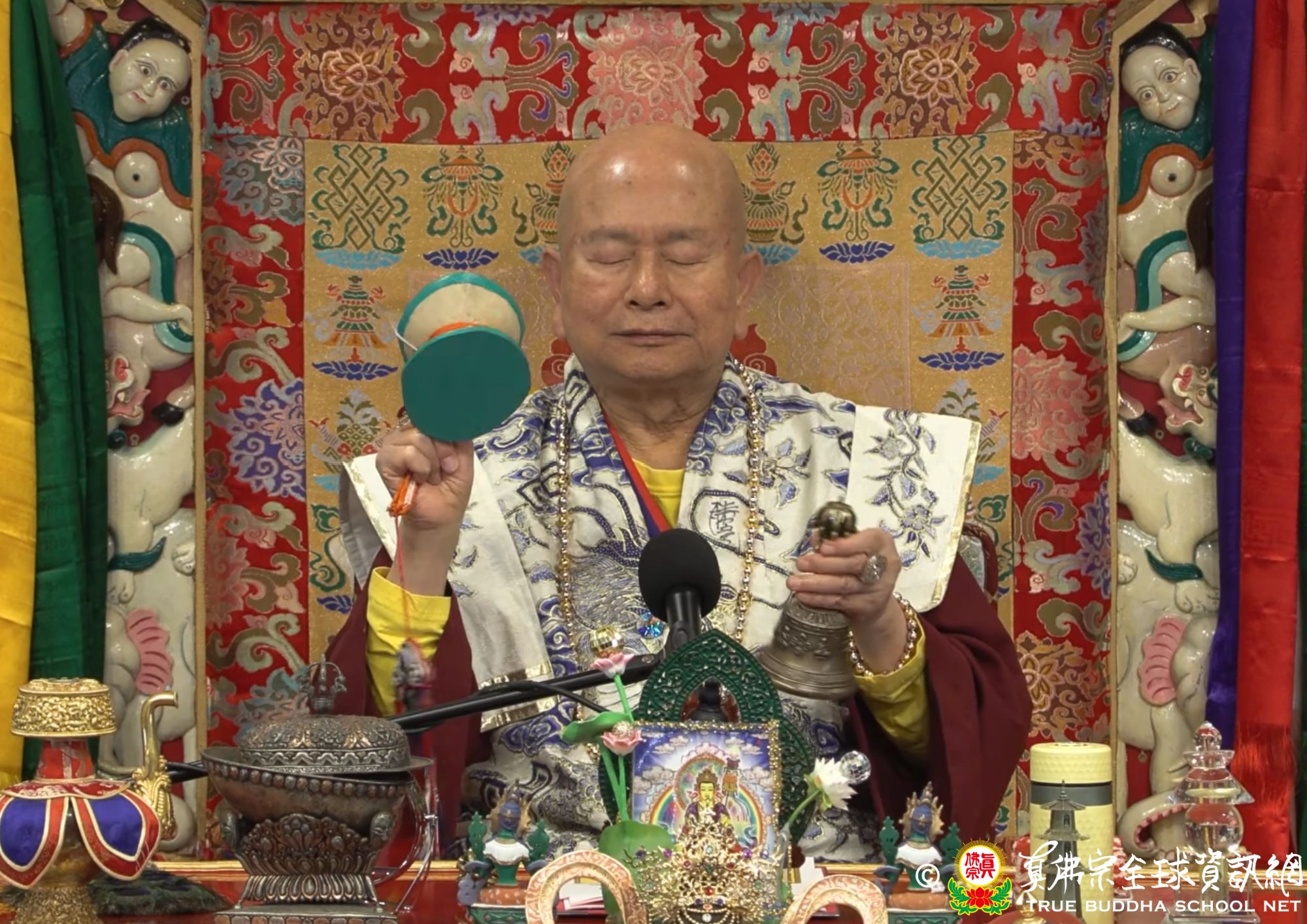
Dharma Discourse by His Holiness
Sarvanivarana-Viskambhin Bodhisattva is a symbol of light. The bodhisattva's primary function is to eliminate afflictions and remove one's karmic obstacles. Sarvanivarana-Viskambhin Bodhisattva can eliminate all obstacles faced by sentient beings, including afflictions, karma, birth and death, and obstacles arising from knowledge. The bodhisattva relieves sentient beings of the suffering caused by afflictions and guides them toward liberation. Sarvanivarana-Viskambhin Bodhisattva also followed Shakyamuni Buddha during the Buddha's time to help deliver sentient beings.
Next week, we will hold a homa ceremony for Marici Bodhisattva, and it will also be the Double Ninth Festival. Marici Bodhisattva is a Dharma Protector of the True Buddha School.
Q&A
Questions from Lotus Yicong, Malaysia
I prostrate to Grandmaster and pray for Guru Buddha to remain in this world. May Guru Buddha remain in good health. Grandmaster, please dispel my doubts.
Guiding others toward liberation requires an even more advanced skill. One must not only recognize one's own level of cultivation but also find appropriate ways to help others begin their ascent and even teach them how to remove their own stumbling blocks. These are skills that everyone engaged in Dharma propagation should possess. Is my understanding correct?
Does this statement apply to disciples who are currently practicing the external tantric practices? Does the credibility of visions seen in dreams gradually increase as one's level of spiritual cultivation improves?
His Holiness's Answers
In response to the first question, His Holiness spiritually consulted Buddhas and Bodhisattvas, who confirmed that both the Dharma brother's explanation at the ceremony and the answer presented in the question were correct.
Regarding the second question, His Holiness explained that people with higher levels of spiritual cultivation naturally see things more truthfully, while the visions of those with lower levels of cultivation are less reliable. Some people can see things naturally without even entering meditation.
Some visions seen in dreams are true, while others are not. Visions experienced during meditation are more real than those seen in dreams. The highest level is attaining the divine eye, through which one can see everything clearly, including things invisible to others.
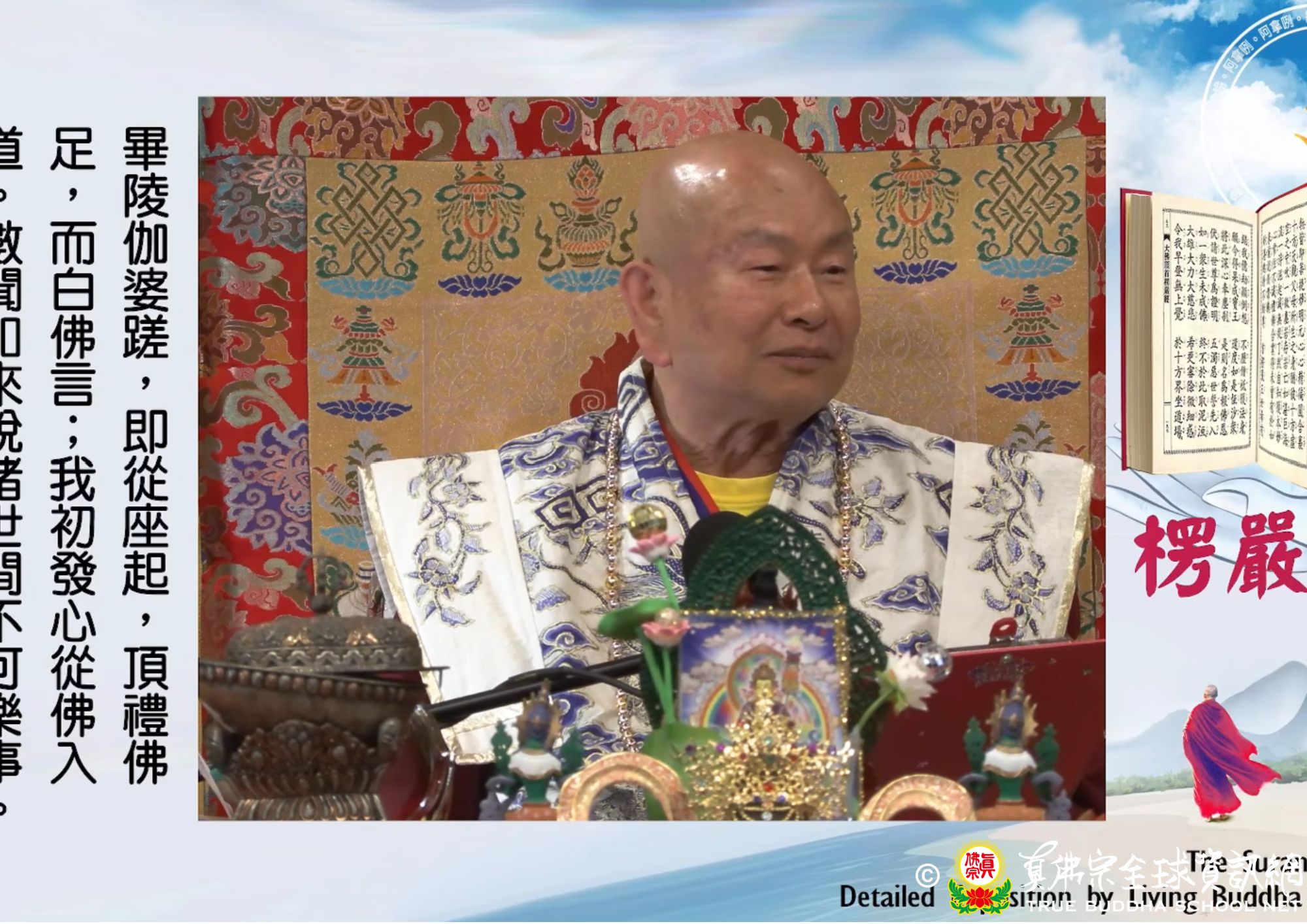
His Holiness’s Commentary on the Surangama Sutra, Volume Five
Pilindavatsa rose from his seat, prostrated at the Buddha's feet, and explained that when he first began learning Buddhism, he frequently heard the Buddha teach that the world was impermanent and that unpleasant things often occurred.
One day, while begging for alms and contemplating the Buddha's teachings, he accidentally injured his foot on a poisonous thorn along the road. As the poison took effect, his entire body became painful.
Despite the pain, he continued meditating and entered a state in which his mind was pure. He contemplated the matter: “I have only one body, so why are there sensations of both pain and the absence of pain?”
Through this contemplation, his body and mind suddenly became empty. During twenty-one days of meditation, he eradicated all his afflictions. The Buddha subsequently confirmed that he had attained arhatship.
When the Buddha asked how he had attained enlightenment, Pilindavatsa explained that he had attained enlightenment by entering a state of emptiness of both body and mind through meditation.
His Holiness reminded everyone that upon attaining enlightenment, one no longer discriminates among things.



You are now formally a member. Please sign in to fully utilize your privileges.
We will send an authentication letter to your registered email account. Please verify that you have received the letter in your inbox. The authentication letter will be mailed within 5-10 minutes after registration. If you do not receive the authentication letter, please check if the letter is located in Spam.


 English