Rejoicing with Buddha
Living Buddha Liansheng and Shimu Visit the Seattle Asian Art Museum
Ling Shen Ching Tze Temple News by Shi Lianyi (蓮屹)
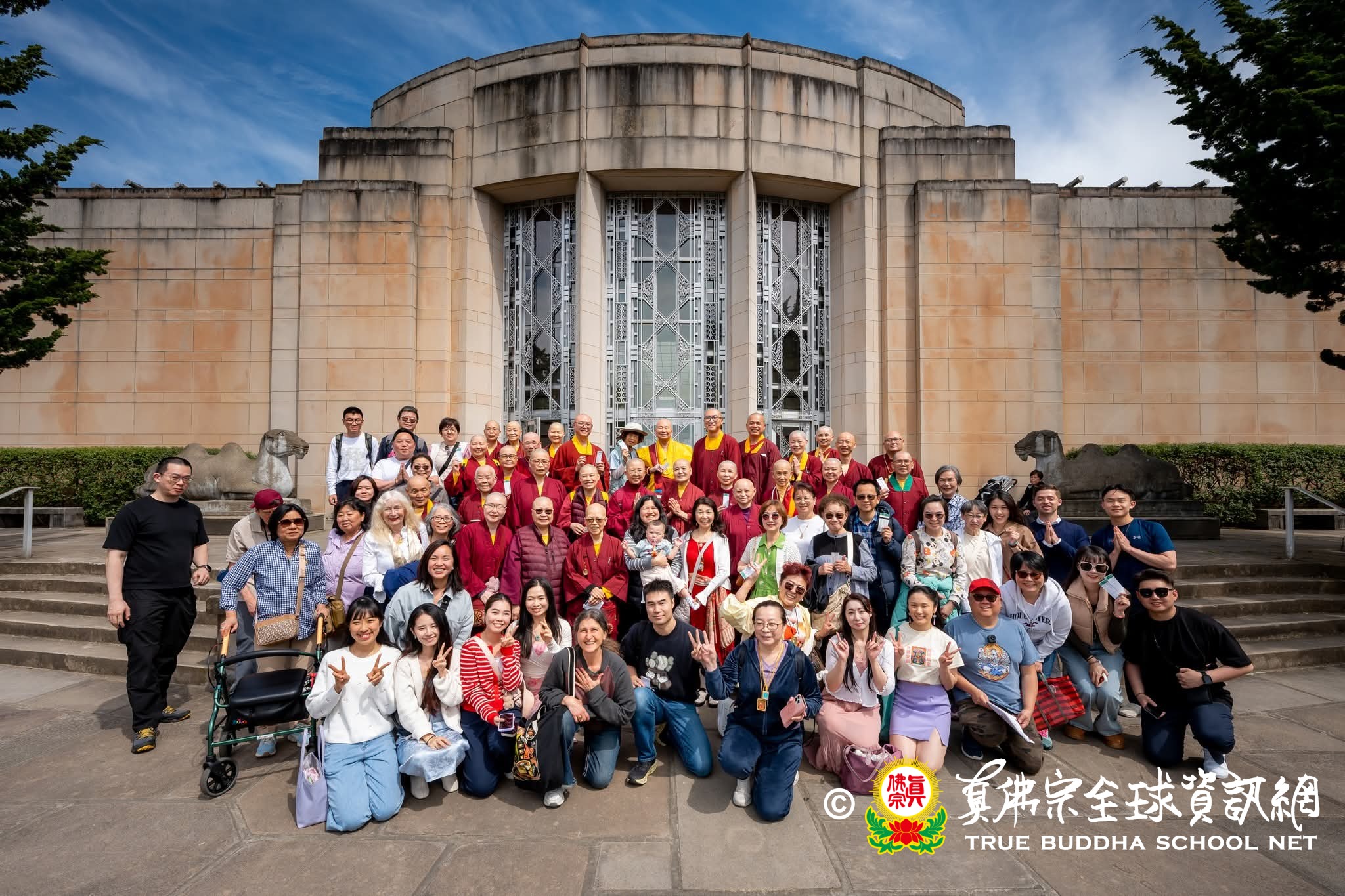
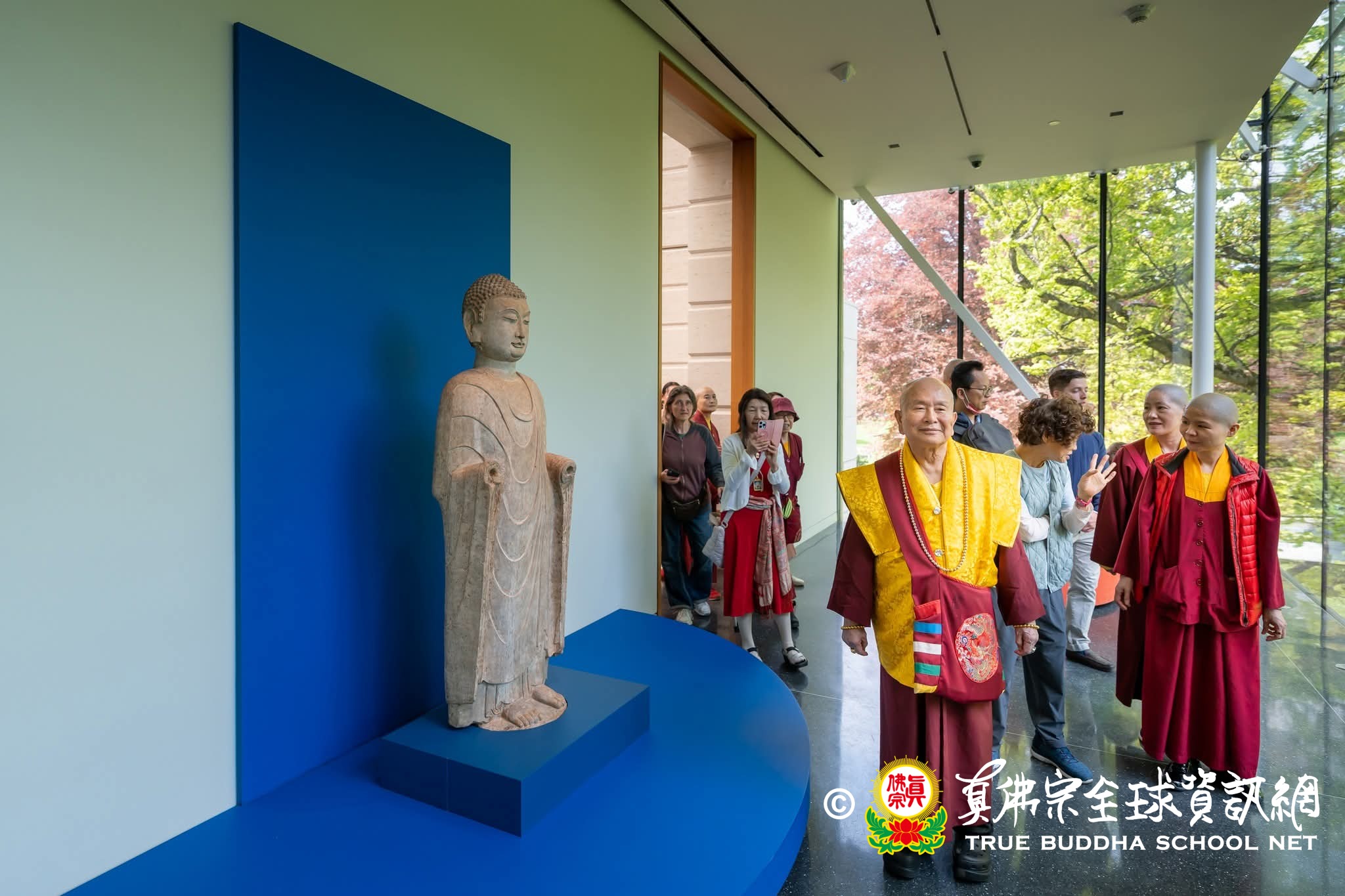
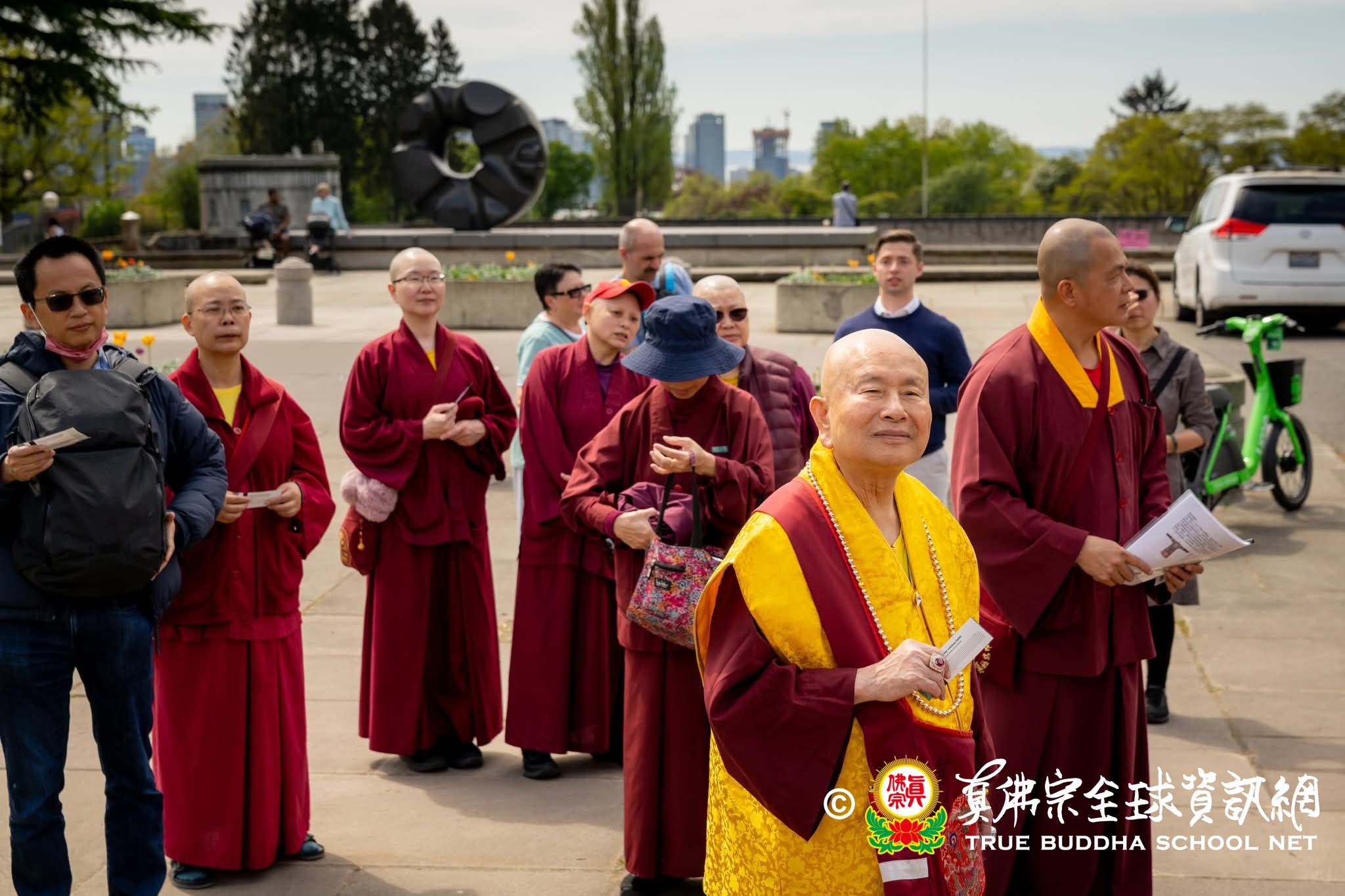
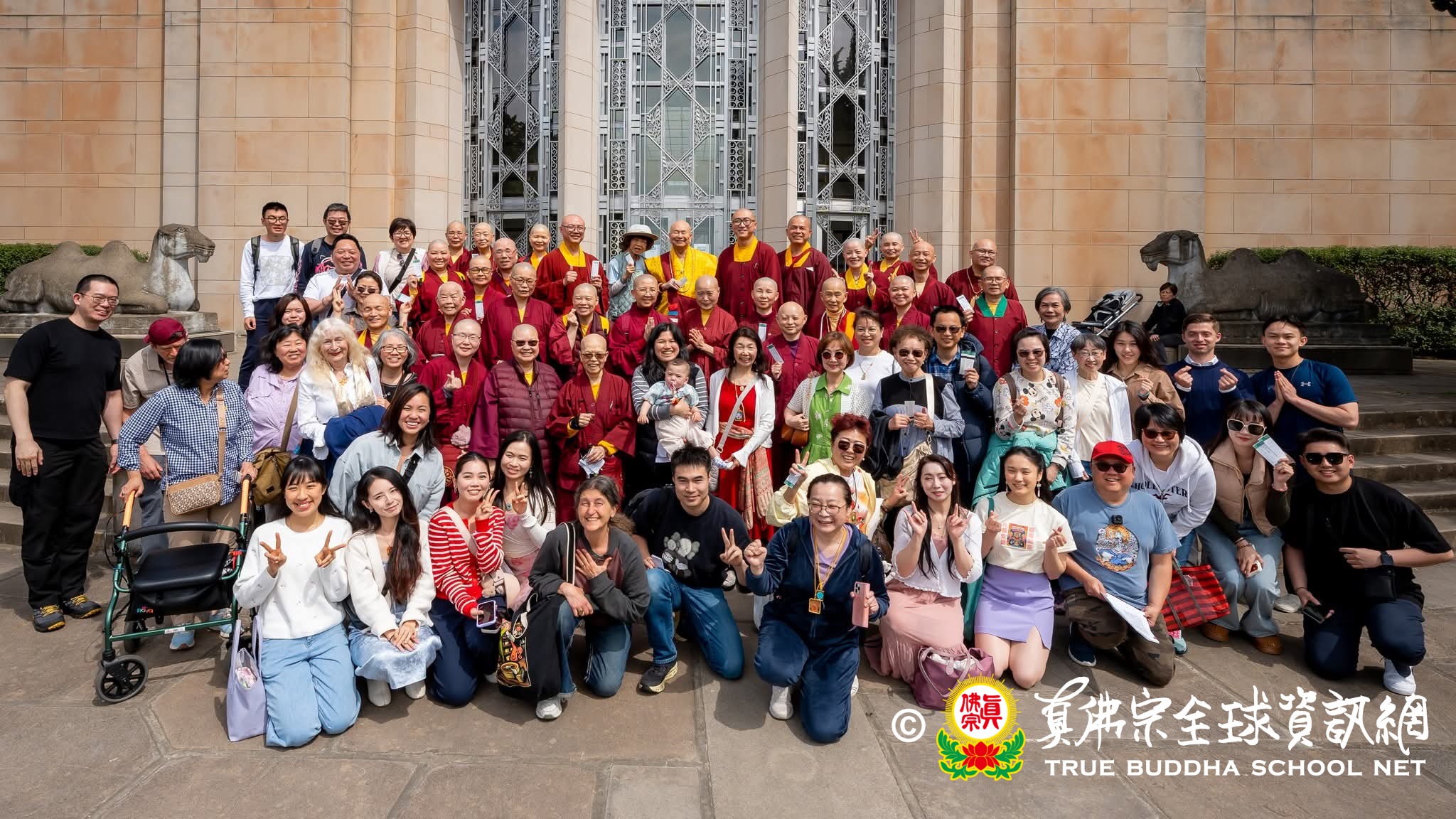
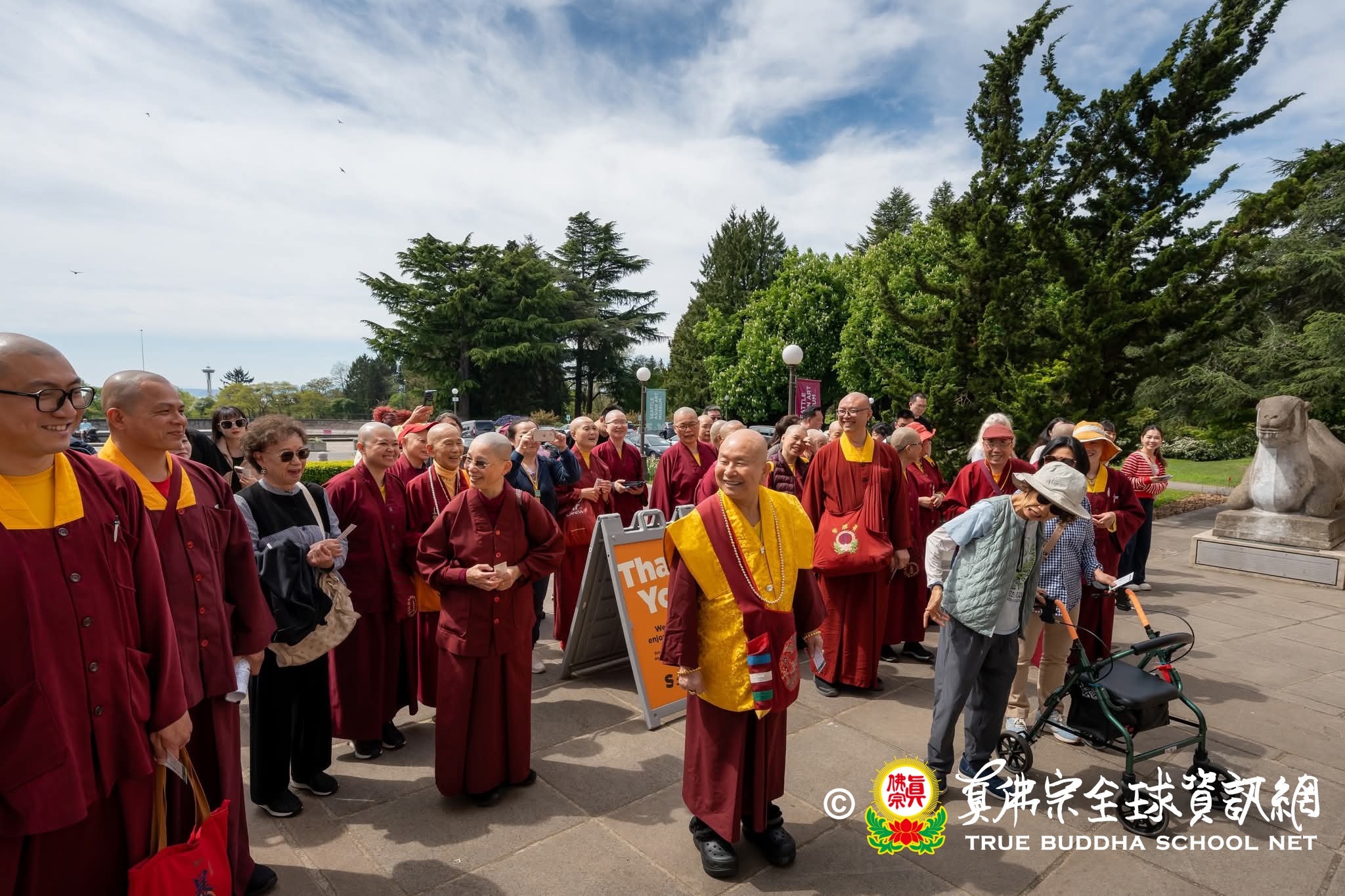
After recovering from a serious illness, His Holiness Living Buddha Liansheng immediately resumed his demanding Dharma schedule, including daily consultations and blessings, as well as presiding over weekend group practices, homa ceremonies, and Dharma teachings, leaving him with very little time for true rest. To help His Holiness and Shimu Master Lianxiang recuperate and relax both body and mind amid their responsibilities, Ling Shen Ching Tze Temple specially arranged a half-day outing on April 30, inviting them to visit the Seattle Asian Art Museum in Volunteer Park. Upon hearing the news, monastics and lay disciples from Ling Shen Ching Tze Temple and Rainbow Temple also joined, bringing the group to approximately 75 people.
The Seattle Asian Art Museum is located in Seattle’s well-known Volunteer Park. The park was designed in the early 20th century by the Olmsted Brothers landscape architecture firm and forms an important part of Seattle’s “Emerald Necklace” park system. The museum, completed in 1933, is an Art Deco-style building designed by architect Carl F. Gould. Its dignified stone exterior harmonizes beautifully with the surrounding greenery.
Upon arrival, the group of monastic and lay disciples drew the curiosity of museum staff, who asked where they had come from. Seizing the opportunity, accompanying disciples introduced Ling Shen Ching Tze Temple, Rainbow Temple, and the Dharma propagation efforts and connections of the True Buddha School. What began as an art visit naturally became an occasion for cultural and spiritual exchange through friendly interaction.
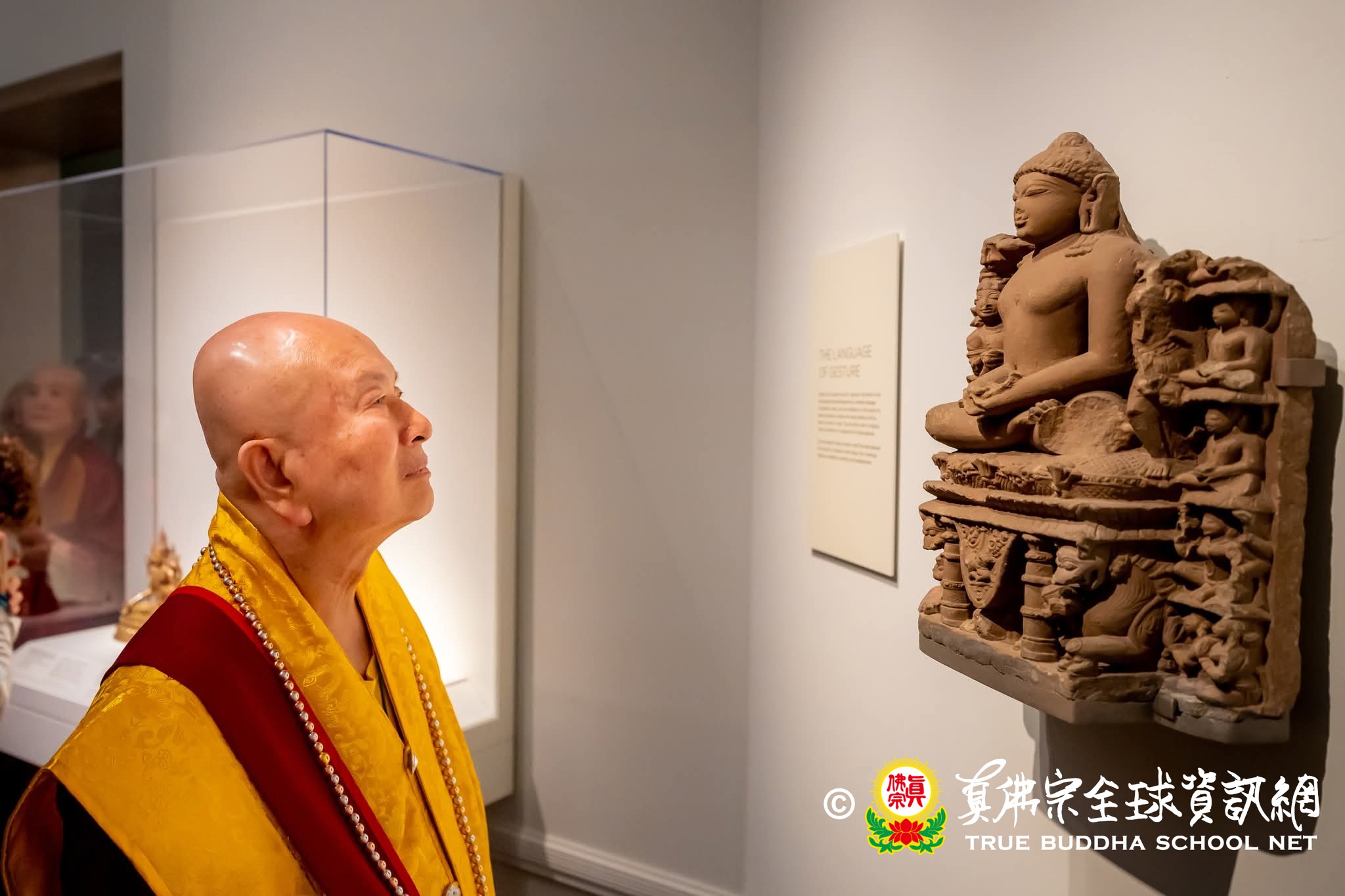
After entering the exhibition hall, the first artwork that drew His Holiness’s attention was Kamadeva, the Indian god of desire. Using this as a point of reference, His Holiness discussed a paradox in human life and spiritual cultivation: on one hand, people possess desires; on the other, they seek liberation from them. Without desire, life loses its basic driving force and even ordinary functioning becomes difficult; yet when desire is left unchecked, one is easily swept away and loses freedom. Cultivation, therefore, lies between these two extremes, neither denying life nor indulging desire, but learning to observe, regulate, and transform it.
During the visit, a memorable moment occurred. Upon seeing His Holiness, a Western visitor, though unaware of his identity, instinctively stopped, brought his palms together in reverence, and respectfully bowed before continuing on. In that brief, wordless moment, a profound spiritual presence was quietly conveyed.
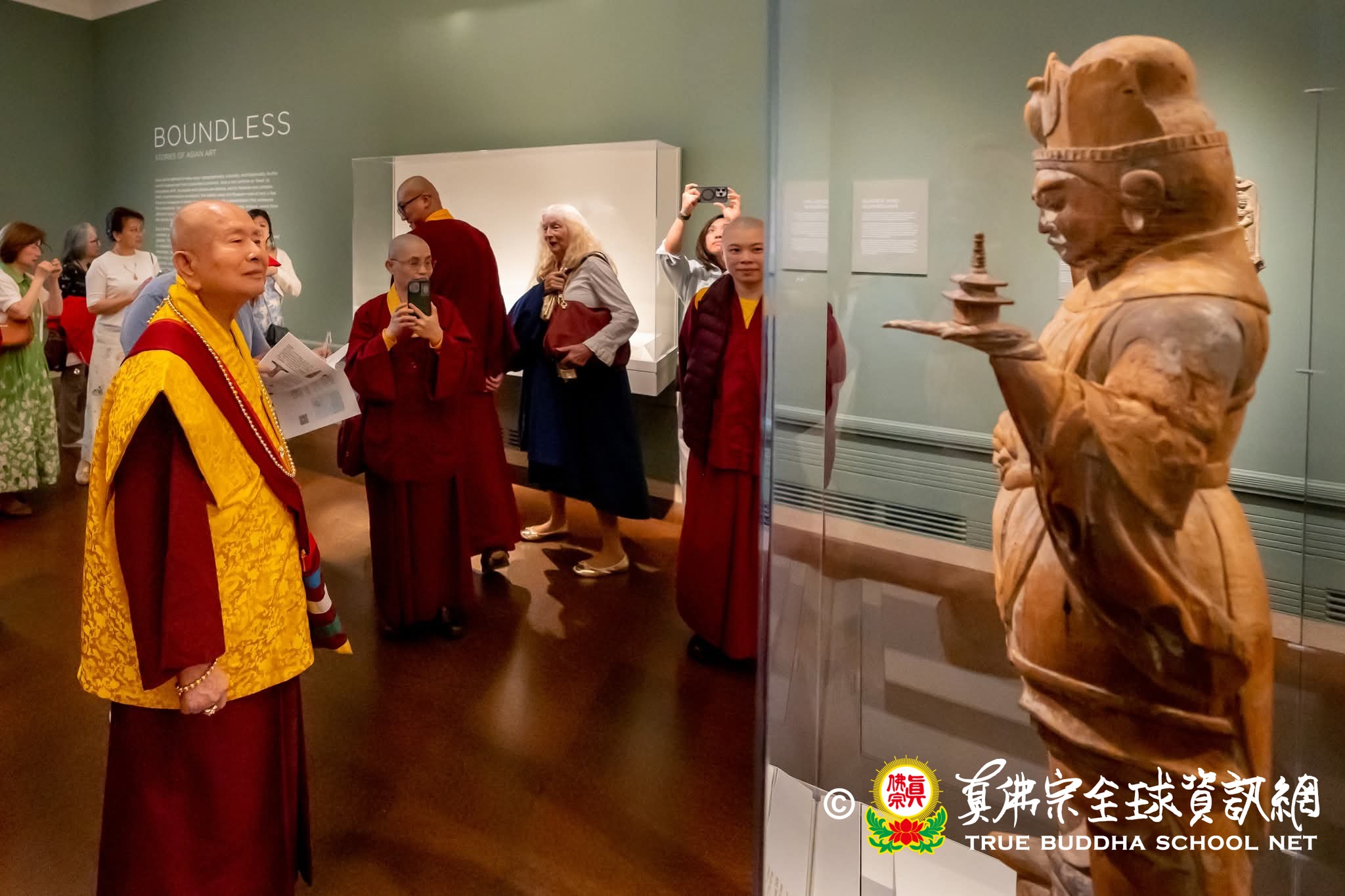
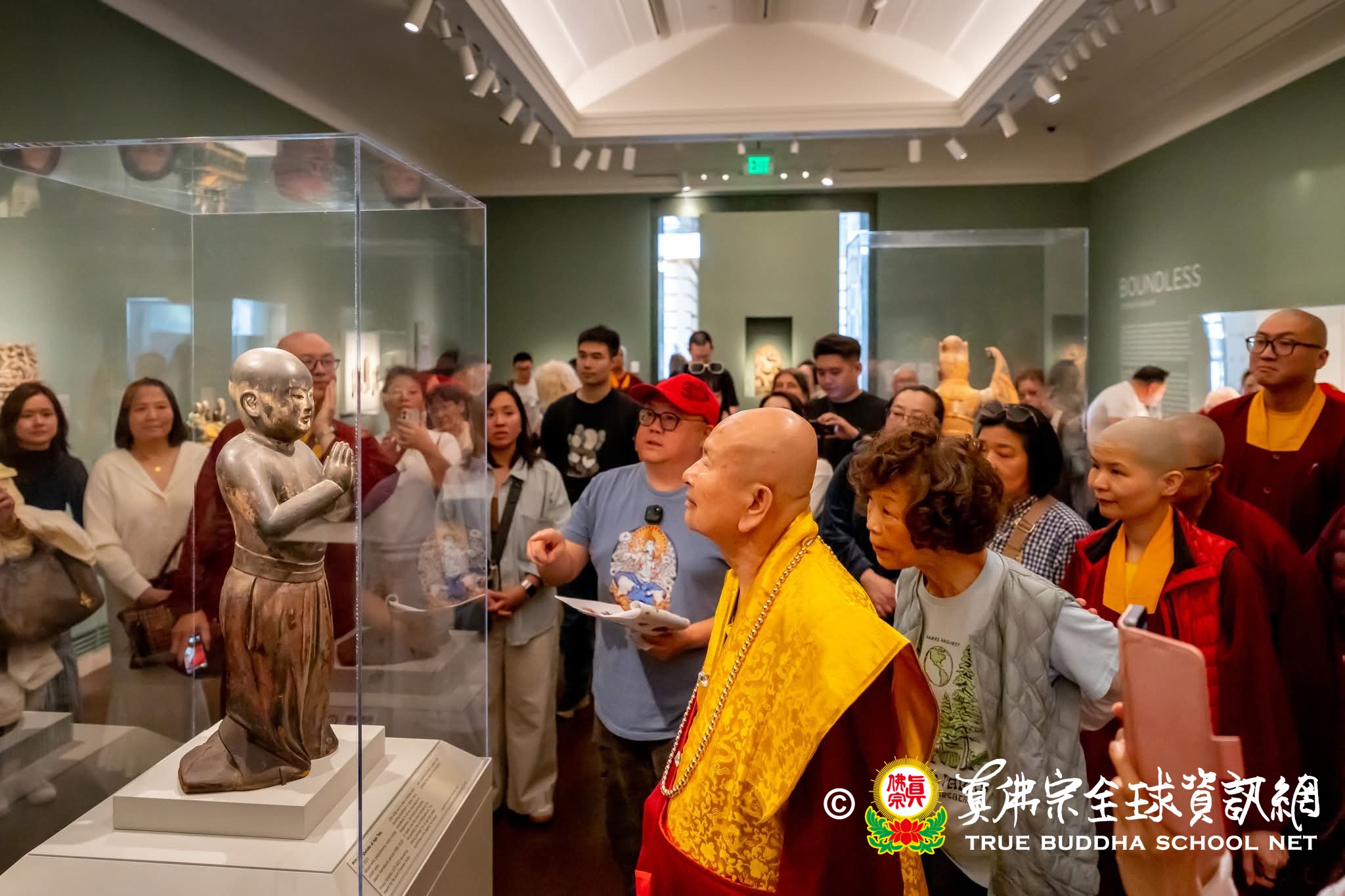
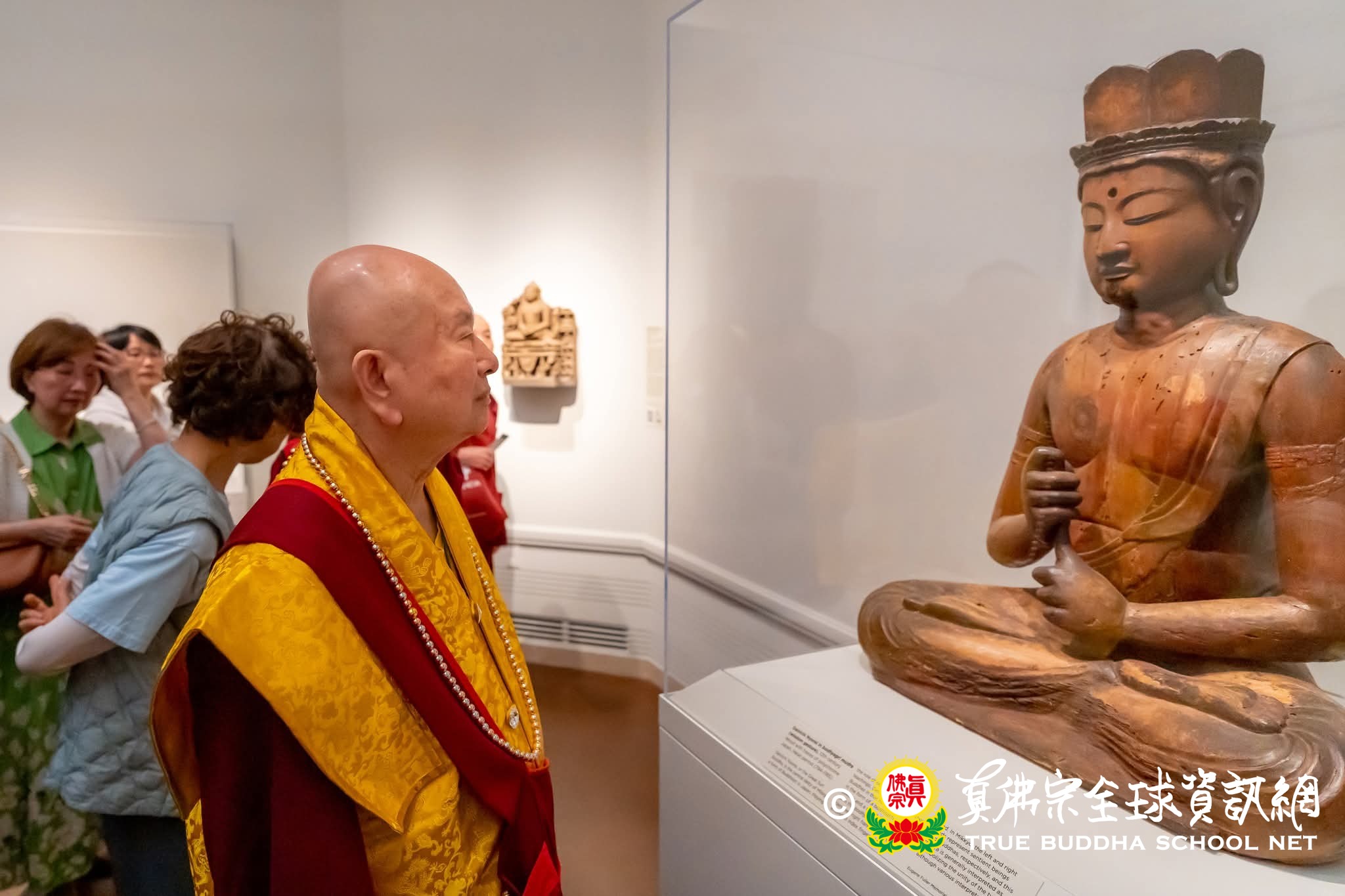
Another highlight was a wooden carving of Prince Shotoku as a two-year-old child, which drew much attention. Prince Shotoku holds an important place in Japanese Buddhist history and is traditionally said to have been able to chant the Buddha’s name with palms joined from a very young age, becoming a symbol of the transmission of Buddhism in Japan. A disciple helping to organize the visit mentioned to His Holiness that the museum also houses a sculpture of Prince Shotoku at age 16 and a painting at age 26, though they were not currently on display. The disciple jokingly added that he had once asked the museum when they might be exhibited again, but refrained from saying, “Prince Shotoku himself is coming to visit,” for fear of being misunderstood.
Hearing this, His Holiness humorously replied, “Prince Shotoku has grown old; he is now Prince Shotoku the Elder.” This witty remark drew laughter from everyone and added a lighthearted warmth to the dignified visit.
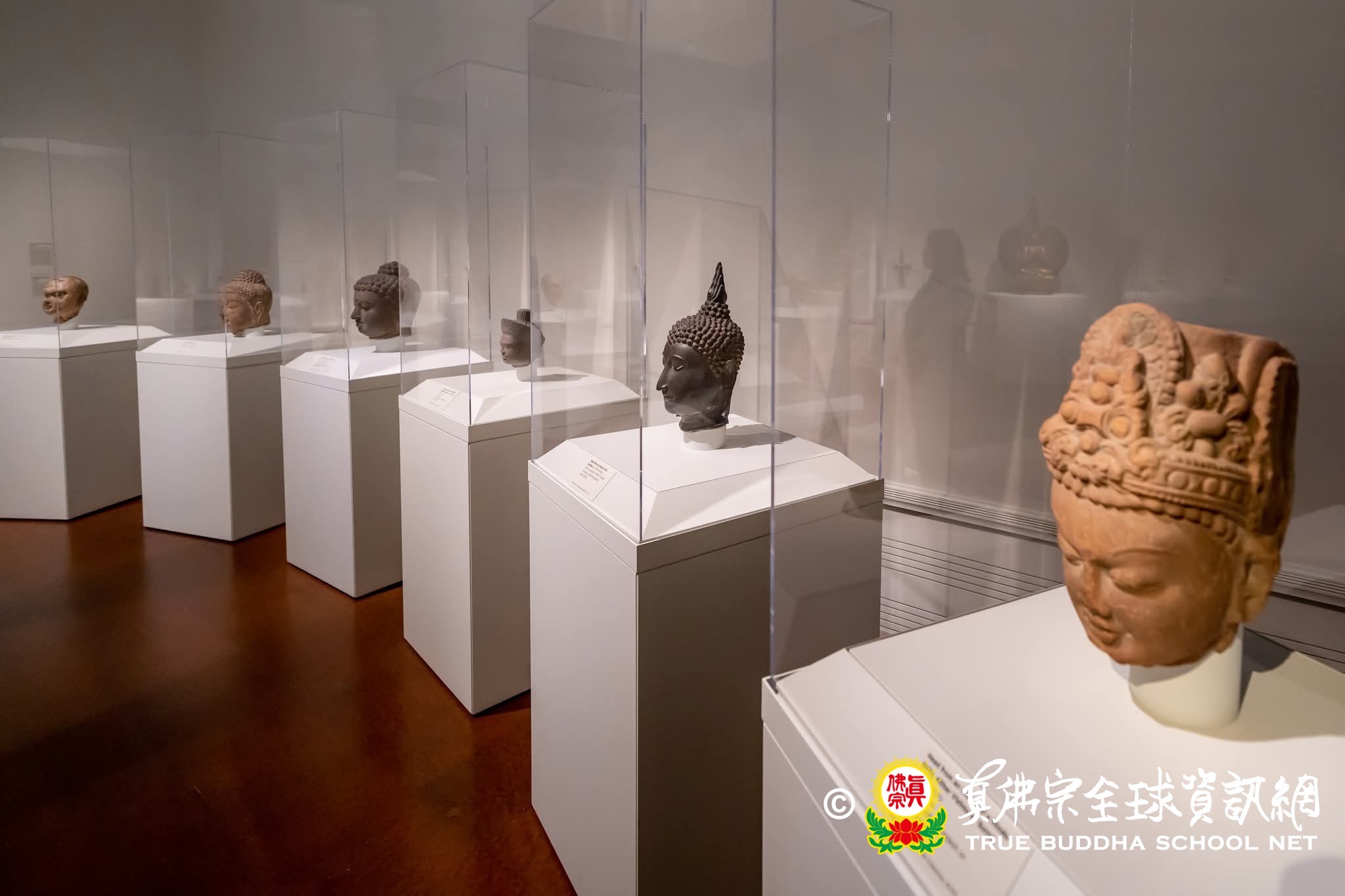
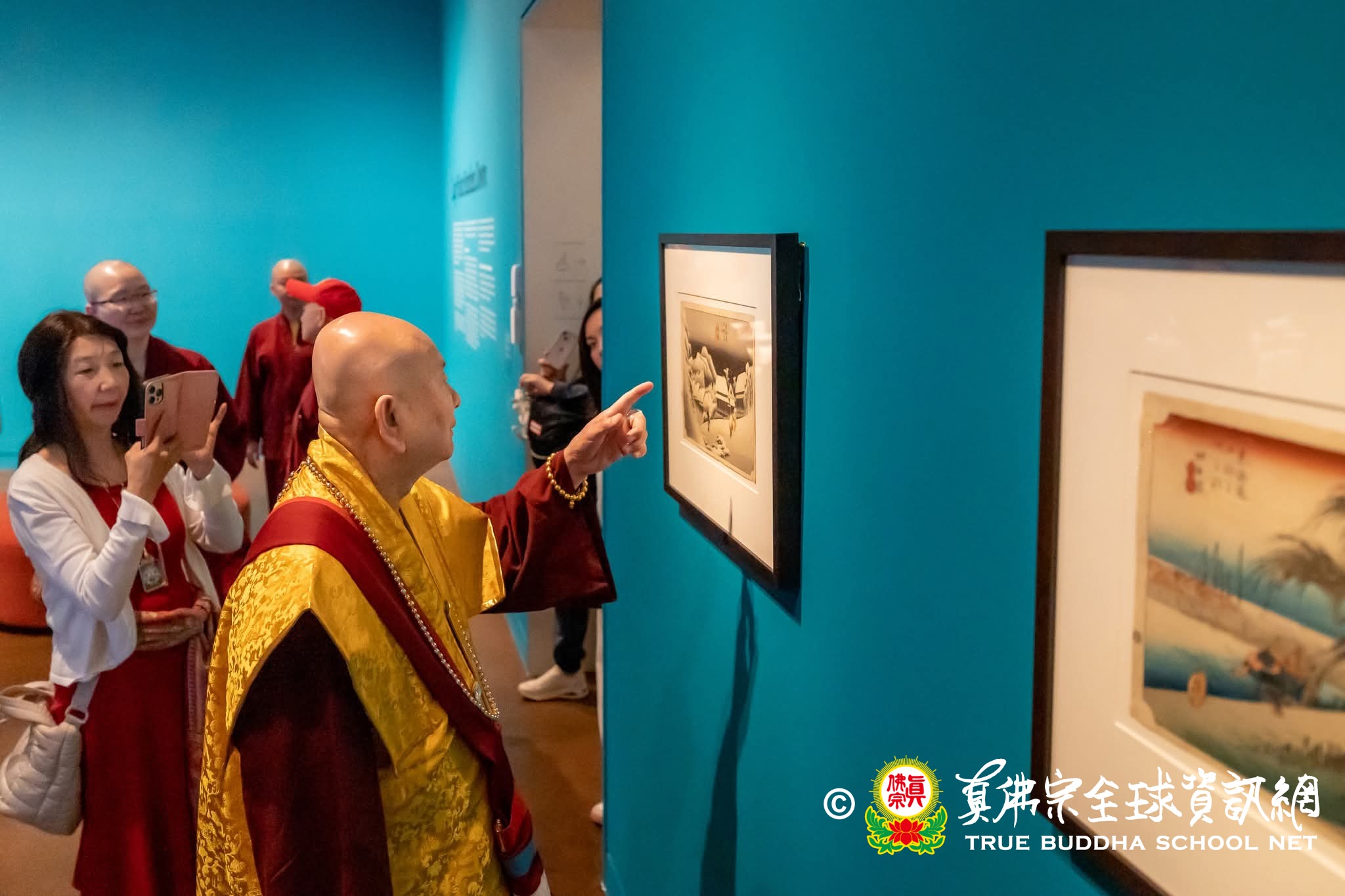
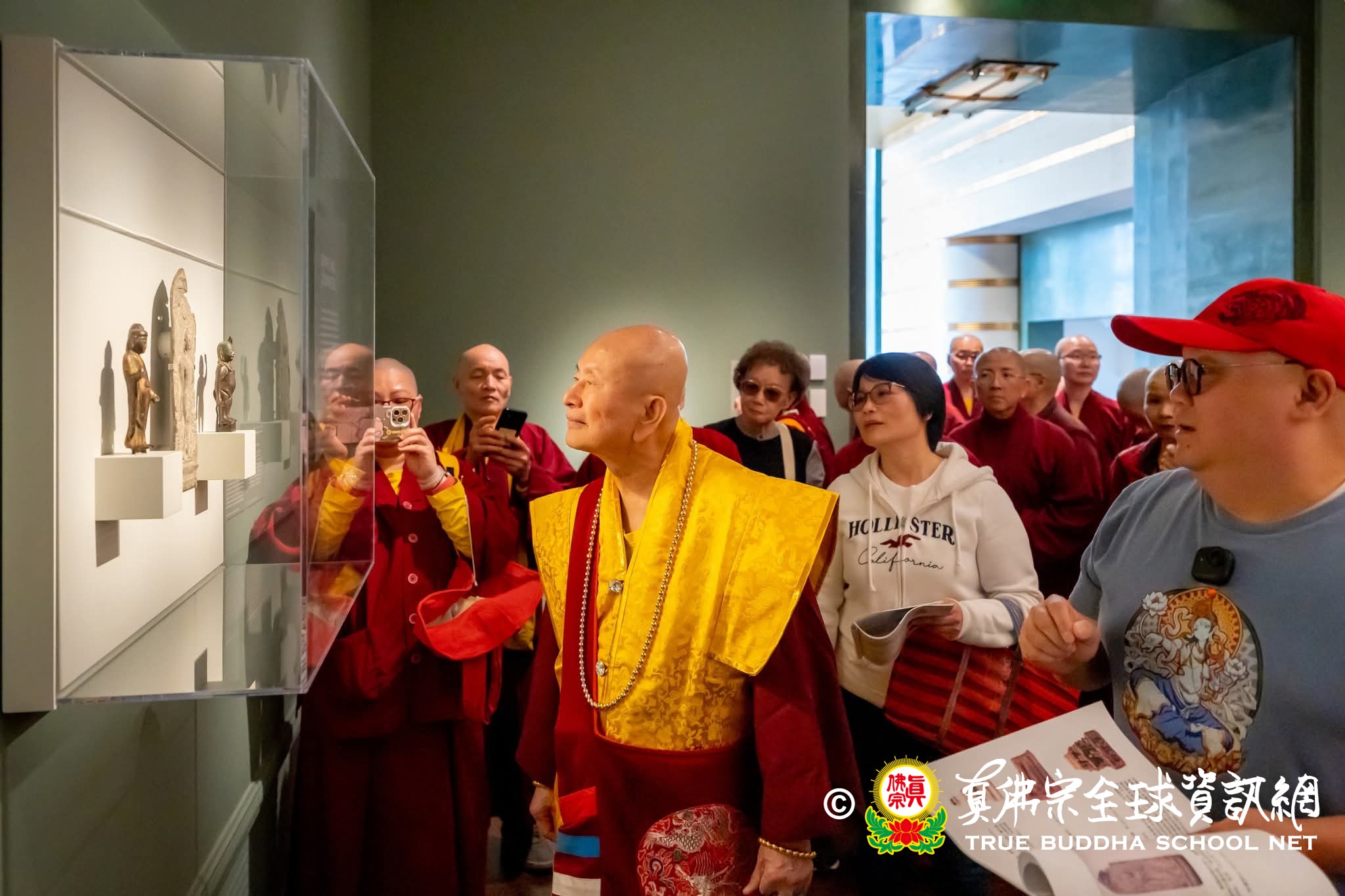
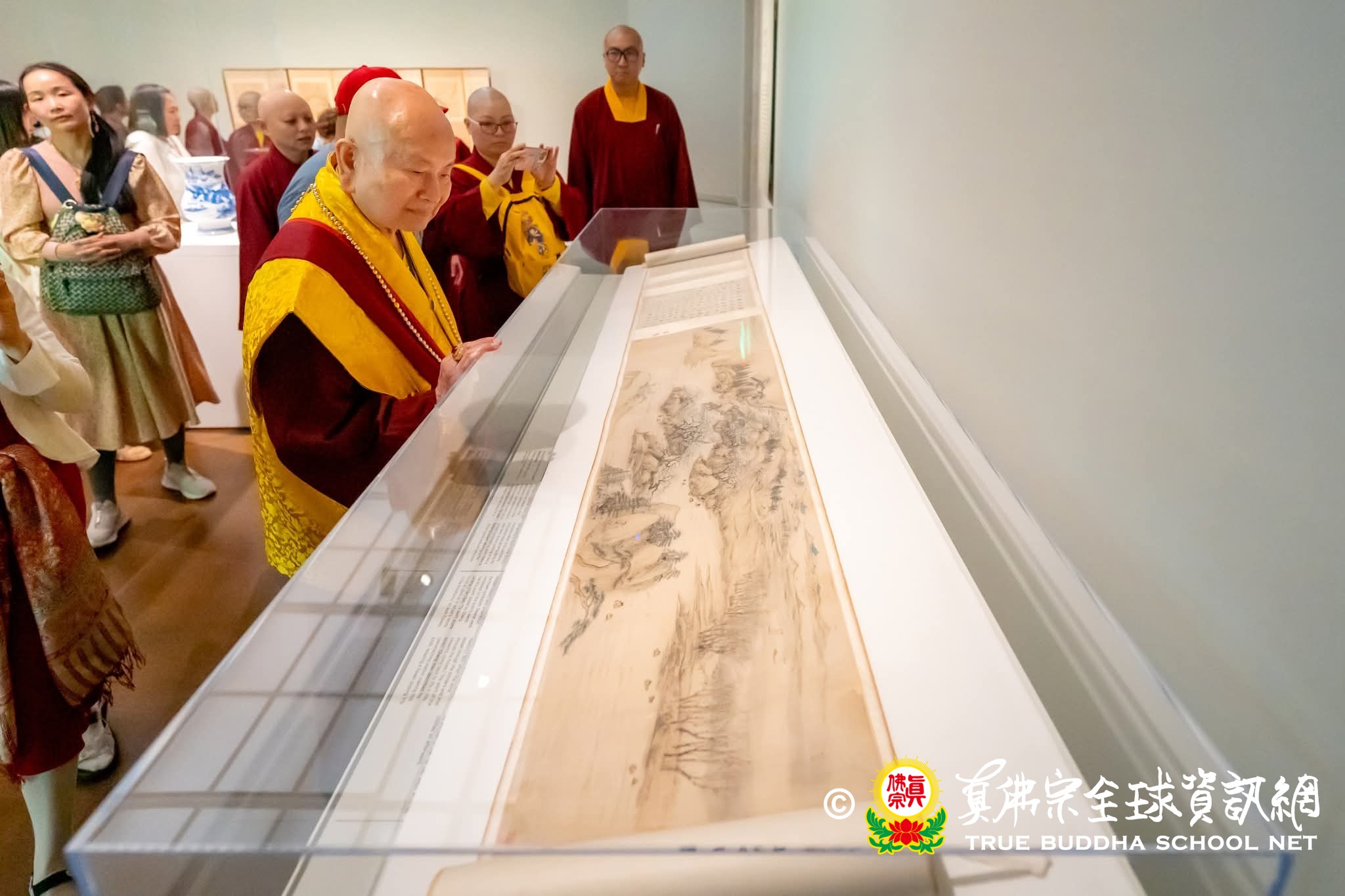
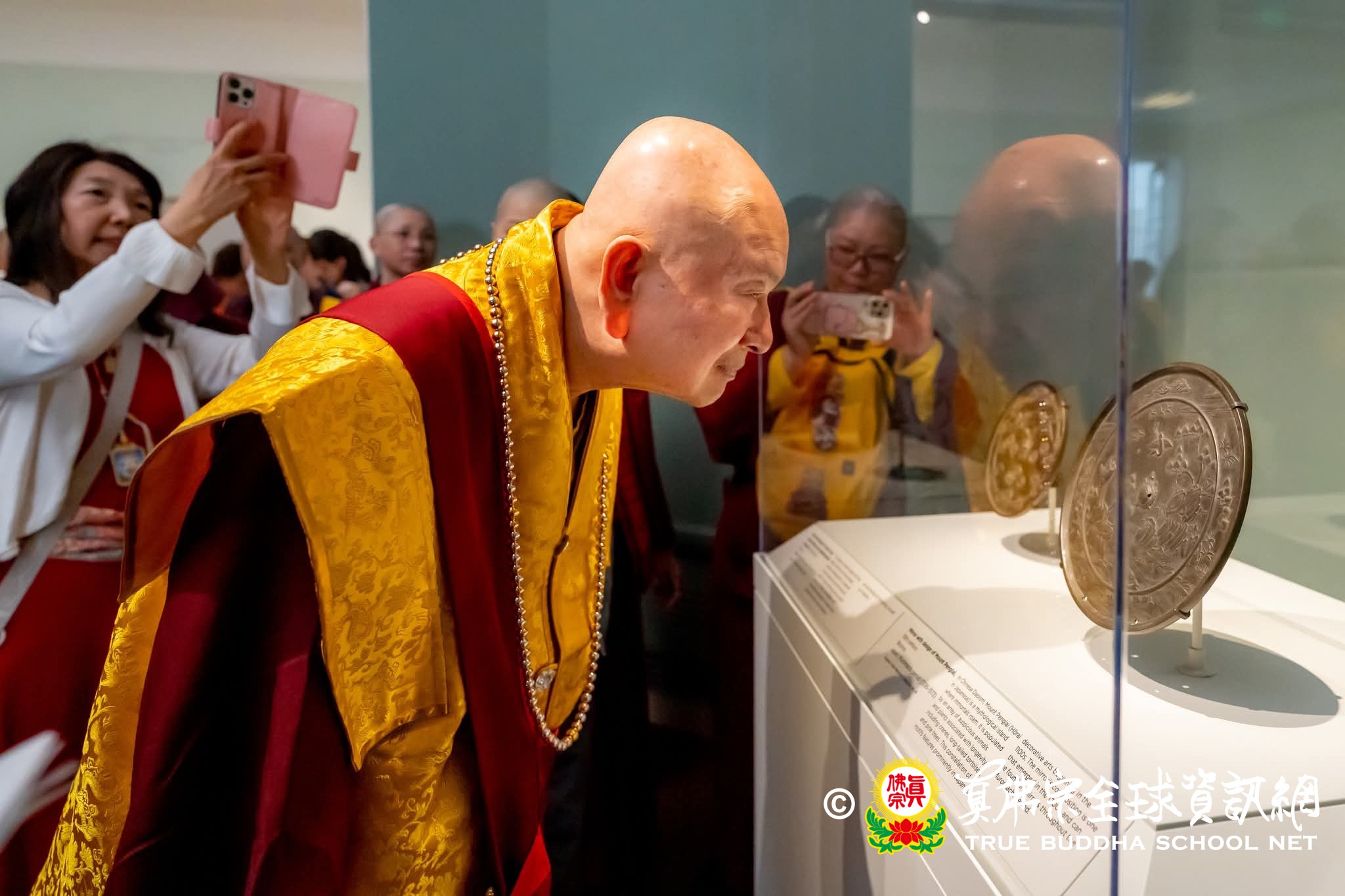
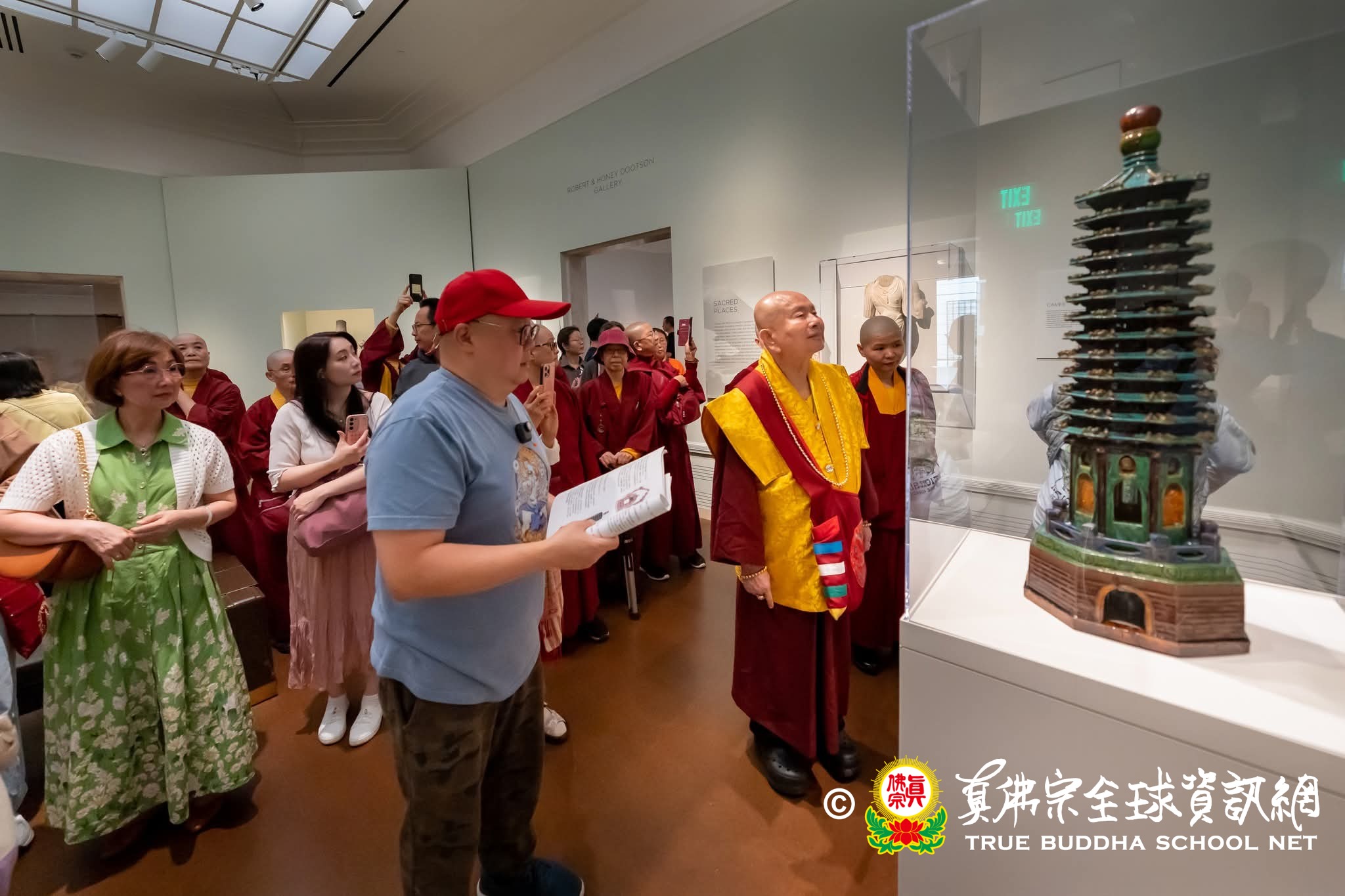
Inside the museum, His Holiness leisurely viewed exhibits of Asian art from China, Japan, Korea, and India. In front of an interactive digital display of Chinese ink paintings, he took the opportunity to explain to disciples the differences in brushwork, artistic expression, and the depiction of birds and insects in traditional Chinese painting, turning a static display into a vivid teaching moment. Before an exhibit of Hariti, His Holiness explained that she is known for having many children, traditionally said to be one hundred, which brought a sense of familiarity and closeness to this Dharma protector.
From Indian deities and Buddhist protectors to Prince Shotoku of Japan and Chinese ink painting, His Holiness offered contextual explanations of cultural origins and spiritual principles throughout the visit. Disciples came to realize that His Holiness is not only deeply versed in Buddhism, but also broadly knowledgeable in world religions and cultures, including philosophical traditions such as Jainism in India.
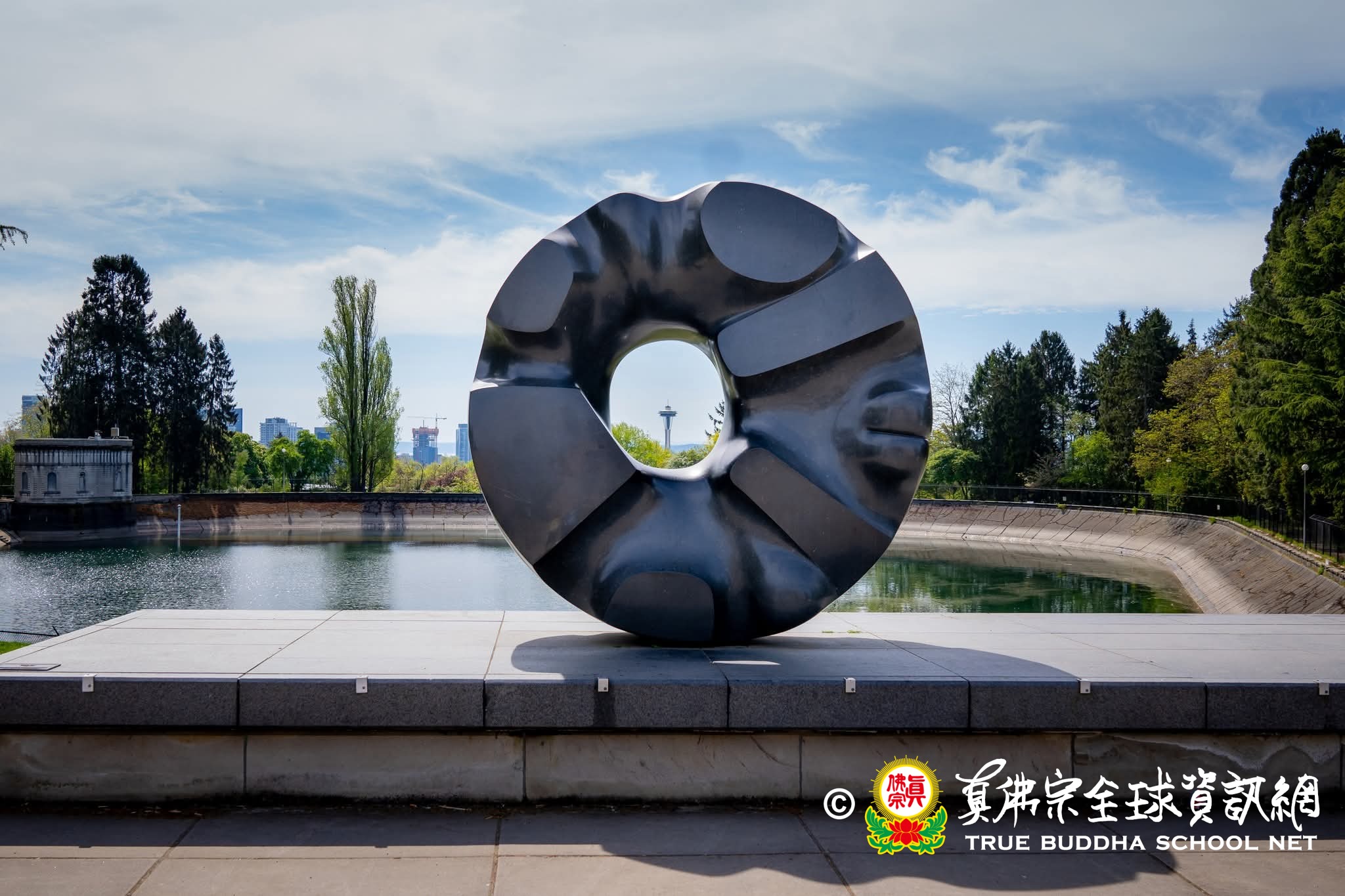
After visiting the museum, His Holiness, Shimu, and the group proceeded to Volunteer Park. The park’s reservoir reflected the sky and trees like a mirror, while its water tower, an iconic landmark, offered panoramic views of Seattle, the Space Needle, and Puget Sound. However, due to the many stairs leading up the tower, the group chose not to ascend, taking into consideration the safety and physical condition of His Holiness and Shimu.
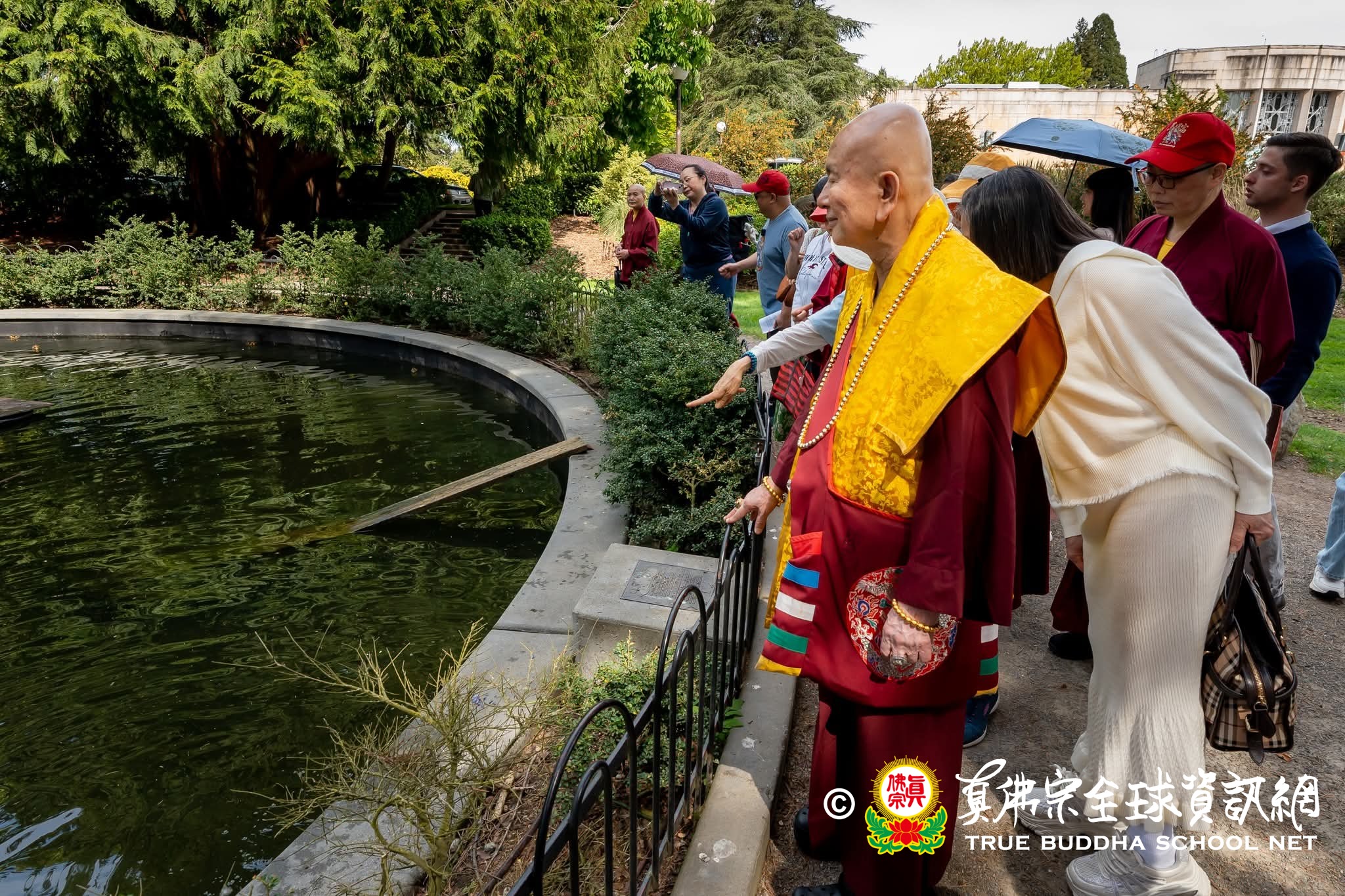
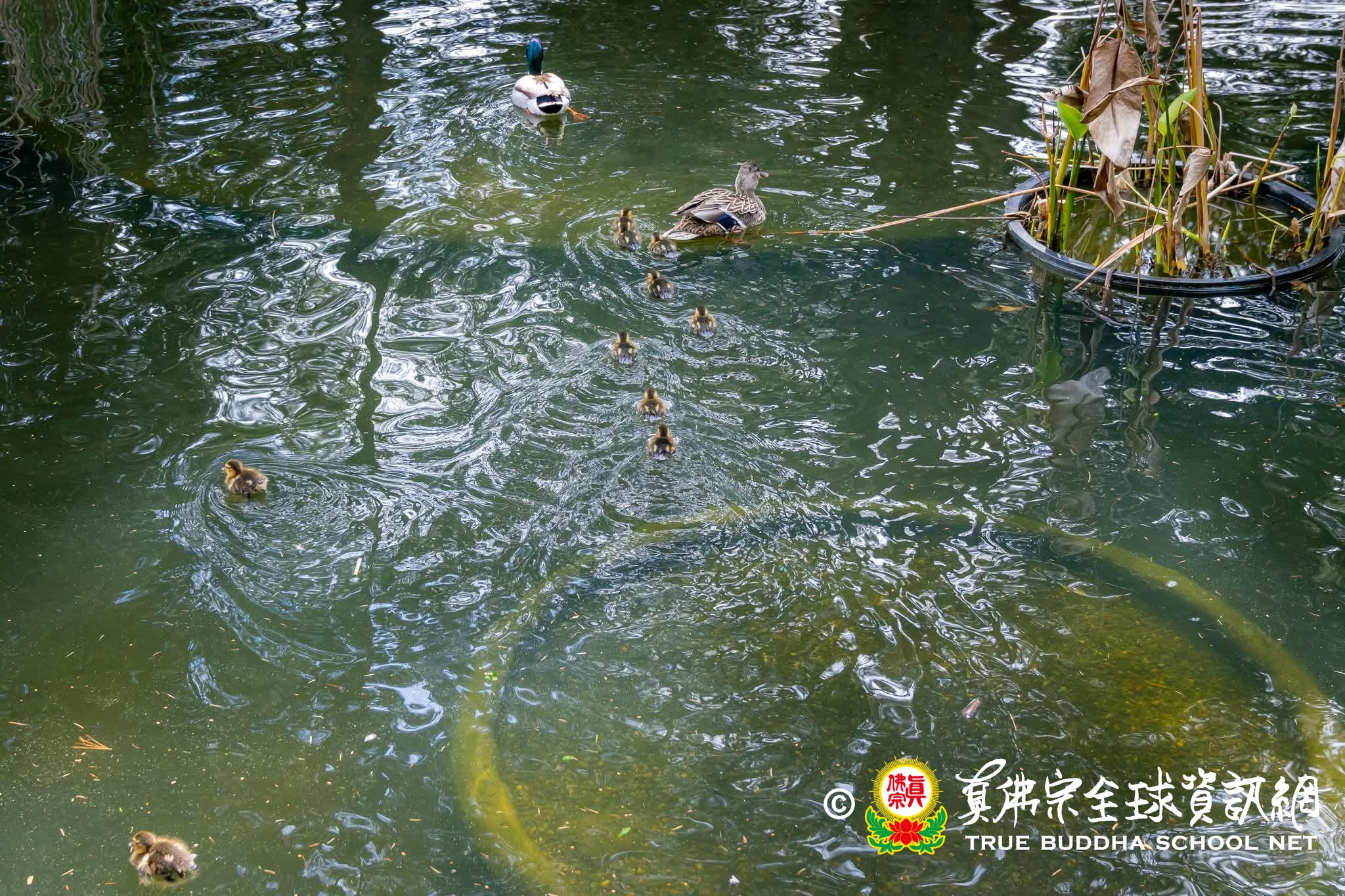
The group then strolled slowly along the pondside path for over ten minutes. Amid warm spring breezes, master and disciples walked together in an atmosphere of joy and harmony. Along the pond, mandarin ducks could be seen swimming in pairs, accompanied by their young, creating a charming scene. Seeing this, His Holiness shared several lighthearted jokes. In one, a husband and wife admire a pair of mandarin ducks, and the wife says enviously, “Look how loving they are.” Later, when they return and see the same pair again, the husband takes a closer look and says, “The female is not the same one anymore.” His Holiness’s vivid storytelling filled the group with laughter.
For the disciples, this brief time together was especially precious. Being able to walk, sightsee, and share laughter with their Grandmaster in the park was a rare and heartwarming experience of master–disciple harmony.
At the end of the visit, His Holiness departed by car. All the disciples stood outside with palms joined in farewell, while His Holiness waved to them for a long time.
Inside the museum, the exhibits were silent, yet His Holiness continuously offered teachings, turning stillness into movement. Along the park paths, laughter drifted with the spring breeze, accompanying the group’s shared journey. In this way, the visit was filled with Dharma joy and blessings.
Translated by TBTTs
Edited by DJ Chang


You are now formally a member. Please sign in to fully utilize your privileges.
We will send an authentication letter to your registered email account. Please verify that you have received the letter in your inbox. The authentication letter will be mailed within 5-10 minutes after registration. If you do not receive the authentication letter, please check if the letter is located in Spam.


 English